What Is Mandrel Tube Bending and Why Does It Matter?
What Is Mandrel Tube Bending and Why Does It Matter?
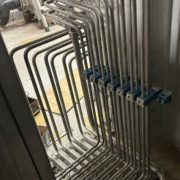
Tube bending is often viewed simply as a method of changing the direction of a tube. In reality, the bending process has a significant impact on system quality, reliability, installation efficiency and long-term operating costs.
For applications involving hydraulic tubing, instrumentation systems, offshore installations and process piping, tube quality is critical. A poorly executed bend can introduce restrictions, weaken the tube and increase the risk of future failures.
Mandrel tube bending is widely regarded as the preferred method for producing high-quality bends where dimensional accuracy and tube integrity are important.
What Is Mandrel Tube Bending?
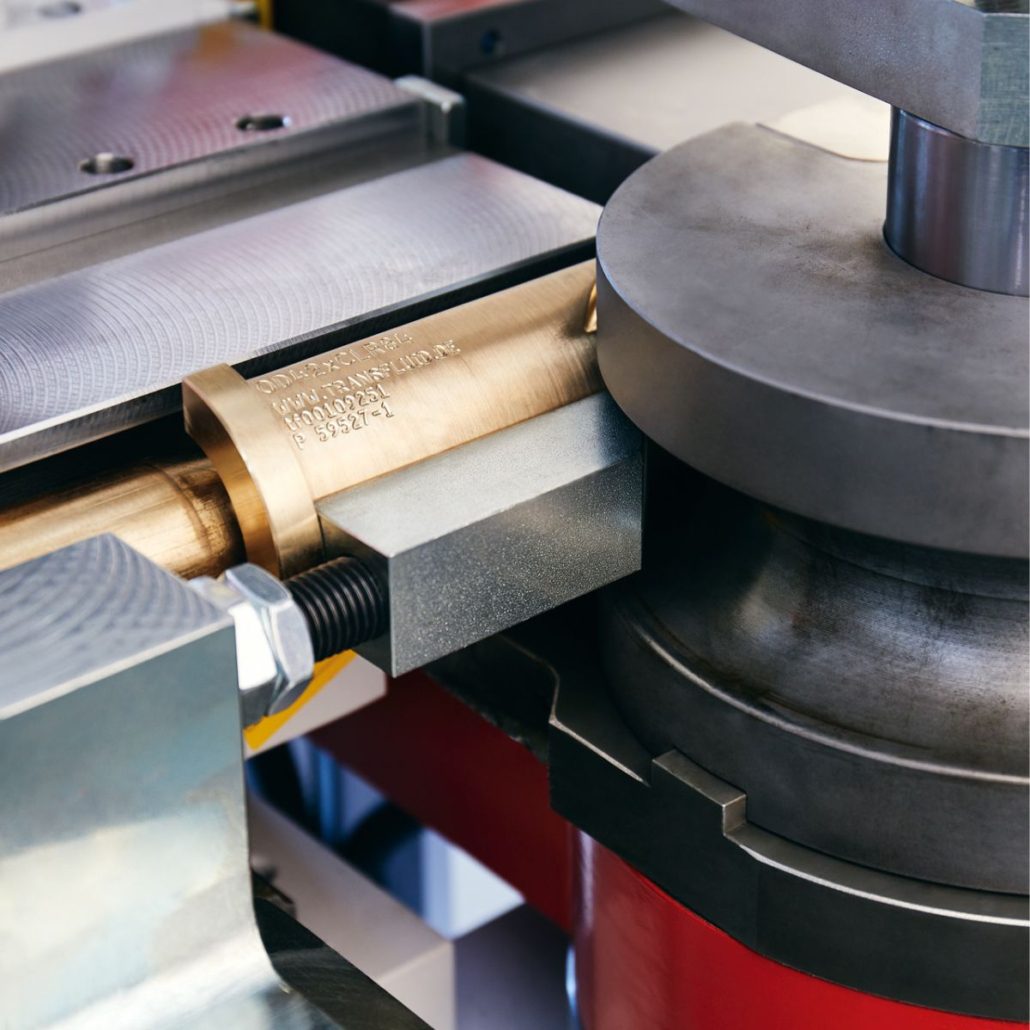
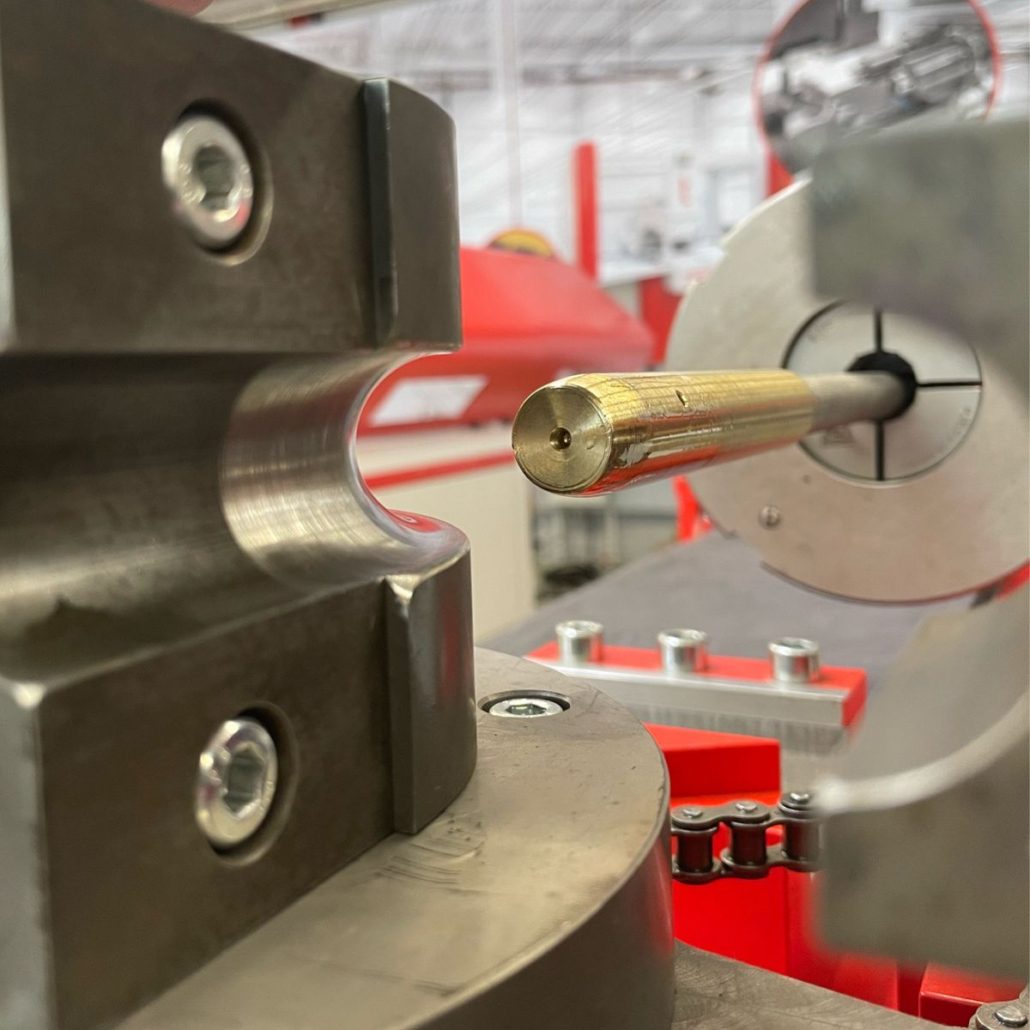
During the bending process, a mandrel is inserted inside the tube to support the material from within.
This internal support helps maintain the tube’s shape throughout the bending operation and prevents excessive deformation.
The result is a smoother, more accurate bend with minimal distortion and improved dimensional consistency.
Unlike conventional bending methods, mandrel bending allows tighter bend radii while maintaining tube geometry and mechanical properties.
Why Is Tube Quality Important?
Every bend influences the performance of the entire piping system.
Poorly formed bends can create:
- Flow restrictions
- Increased pressure losses
- Reduced mechanical strength
- Increased turbulence
- Difficult installation
- Premature component wear
- Reduced system reliability
For hydraulic and instrumentation systems operating under high pressure, even small geometric deviations can have significant consequences.
How Does Mandrel Tube Bending Reduce Ovality?
One of the most common issues during tube bending is ovality.
Without sufficient internal support, the tube tends to flatten during bending, causing the circular cross-section to become oval.
Excessive ovality can:
- Restrict flow
- Increase pressure losses
- Affect fitting performance
- Reduce structural integrity
Mandrel bending helps maintain a consistent cross-section throughout the bend and preserves the original tube geometry.
How Does Mandrel Tube Bending Prevent Wrinkling?
During bending, material on the inside radius is compressed.
Without proper support, this compression can cause wrinkles to form inside the tube.
Wrinkling can:
- Restrict internal flow
- Create turbulence
- Reduce fatigue resistance
- Complicate inspection procedures
The internal support provided by the mandrel significantly reduces or eliminates wrinkling, even when tight bend radii are required.
How Does Mandrel Tube Bending Reduce Wall Thinning?
As the tube bends, the material on the outside radius stretches.
Excessive stretching can reduce wall thickness and weaken the tube.
This is particularly important for:
- -High-pressure hydraulic systems
- -Instrumentation tubing
- -Offshore applications
- -Process piping
Mandrel bending helps distribute forces more evenly and minimizes wall thinning, maintaining both strength and pressure integrity.
How Does Mandrel Tube Bending Improve Flow?
Flow efficiency depends heavily on maintaining a consistent internal diameter.
When a tube becomes oval or develops wrinkles, turbulence and pressure losses increase.
By preserving the tube’s internal geometry, mandrel bending provides:
- Improved flow characteristics
- Reduced pressure losses
- Reduced turbulence
- More predictable system performance
These benefits are particularly valuable in hydraulic, instrumentation and process systems where flow stability is critical.
Can Mandrel Tube Bending Reduce Leaks?
Yes.
One of the biggest advantages of modern tube bending is the ability to reduce the number of fittings and welded joints.
Each fitting, adapter and weld represents a potential leak point.
By replacing multiple fittings with a single continuous bent tube, it becomes possible to:
- Reduce leak points
- Improve reliability
- Reduce installation time
- Simplify maintenance
- Improve system appearance
In many hydraulic systems, reducing the number of connections is one of the most effective ways to improve long-term reliability.
How Does CNC Mandrel Tube Bending Improve Installation Accuracy?
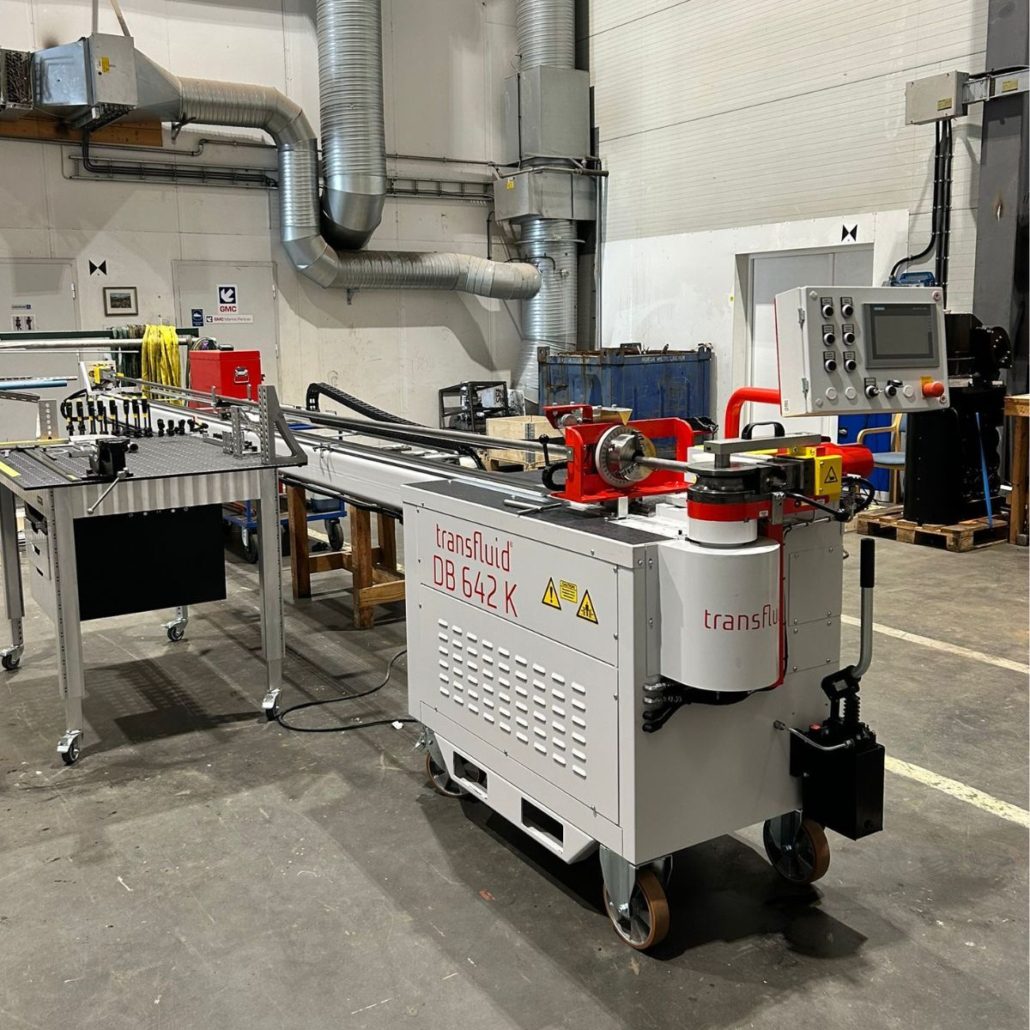
Modern CNC tube bending machines can produce complex tube geometries directly from 3D CAD models and STEP files.
This provides several advantages:
- High repeatability
- Improved dimensional accuracy
- Faster production
- Reduced installation adjustments
- Better fit-up during assembly
For offshore and marine projects, accurate prefabrication can significantly reduce installation time and rework onsite.
Mandrel Bending vs Conventional Fabrication
| Feature | Conventional Bending | Mandrel Bending |
|———-|——————–|—————-|
| Ovality Control | Limited | Excellent |
| Wrinkle Prevention | Limited | Excellent |
| Wall Thickness Retention | Moderate | Excellent |
| Tight Bend Radii | Limited | Excellent |
| Flow Characteristics | Variable | Optimized |
| Installation Accuracy | Good | Excellent |
| Number of Fittings Required | Higher | Lower |
Typical Applications
Mandrel tube bending is widely used in:
- Hydraulic systems
- Instrumentation tubing
- Offshore installations
- Marine systems
- Process piping
- High-pressure tubing systems
- OEM equipment manufacturing
- Power generation projects
When is mandrel tube bending required?
Mandrel bending is typically recommended when tight bend radii, thin-wall tubing, high-pressure applications or strict dimensional requirements are involved.
Can stainless steel tubing be mandrel bent?
Yes. Stainless steel is one of the most common materials used in mandrel bending applications, particularly within offshore, marine and process industries.
Does mandrel bending reduce the number of fittings?
Yes. By creating complex tube geometries from a single piece of tubing, mandrel bending often eliminates multiple fittings and welded joints.
Can mandrel bending improve hydraulic system reliability?
Yes. Better tube geometry, fewer fittings, reduced leak points and improved flow characteristics all contribute to improved reliability and reduced maintenance requirements.
Conclusion
Mandrel tube bending is not simply a method for creating tighter bends.
It is a manufacturing process that improves tube quality, maintains system performance, reduces leak points and lowers long-term operating costs.
For demanding offshore, marine and industrial applications, mandrel bending often provides a safer, cleaner and more reliable solution than conventional fabrication methods.
The best fitting is often the one that is no longer needed because the tube was bent correctly in the first place.
Need precision tube bending for your next project?
Ekke Hydraulics provides mandrel tube bending, tube prefabrication and STEP-based production for offshore, marine and industrial applications throughout Norway.
Contact us to discuss your project.
///////
This post is also available in: